Hiroshima Atomic Bomb Facts: What Happened and Why It Still Matters
Key facts about the August 6, 1945 atomic bombing of Hiroshima, written by a local. Hibakusha, black rain, the Dome, and the lasting effects.
On the morning of August 6, 1945, the United States dropped the first atomic bomb used in warfare on Hiroshima. I live in this city, and the longer I spend here, the more I understand that the bombing is not a chapter you finish reading. It sits in the streets, in the river, and in the quiet way long-time residents talk about August.
The Morning of August 6, 1945
The bomb detonated at 8:15 in the morning at roughly 600 meters above the city. The codename “Little Boy” referred to the uranium device dropped here; “Fat Man,” the plutonium device used three days later on Nagasaki, was a different design. Detonating above the ground rather than at impact level was a deliberate choice to spread the blast across a flat city laid out along a river delta.
For a fuller chronology of how the event fits into the longer story of the city, the Hiroshima history timeline is a good starting point, and the question of why Hiroshima was chosen sits at the center of most visitor conversations.
The Scale of the Destruction
By the end of 1945, around 140,000 people in Hiroshima had died from the blast, the heat, the firestorm, and acute radiation exposure. More than ninety percent of the city’s buildings were destroyed or rendered uninhabitable. The temperature at the hypocenter is estimated to have reached several thousand degrees Celsius, hot enough to vaporize organic material at close range and to leave permanent shadow imprints on stone where bodies had blocked the flash.
A heavy, oily rain fell in the hours after the explosion, carrying radioactive particles back down across neighborhoods to the north and west. Residents drank it. Many had no other water source. The “black rain” remained a contested legal category for decades, with cases over compensation continuing into recent years.
The Hibakusha and the Long Effects
Survivors carried the bombing in their bodies. Hibakusha, the Japanese term for those exposed to the bombing, went on to develop elevated rates of certain cancers, blood disorders, and other illnesses tied to radiation. Children born to hibakusha were watched closely both for legitimate health reasons and, less fairly, by a wider society that treated the bombing as something contagious or shameful. That stigma shaped marriages, careers, and silence inside families for two generations. The longer story of how the city’s people rebuilt their lives is told well in this account of the aftermath.
What Stands Today
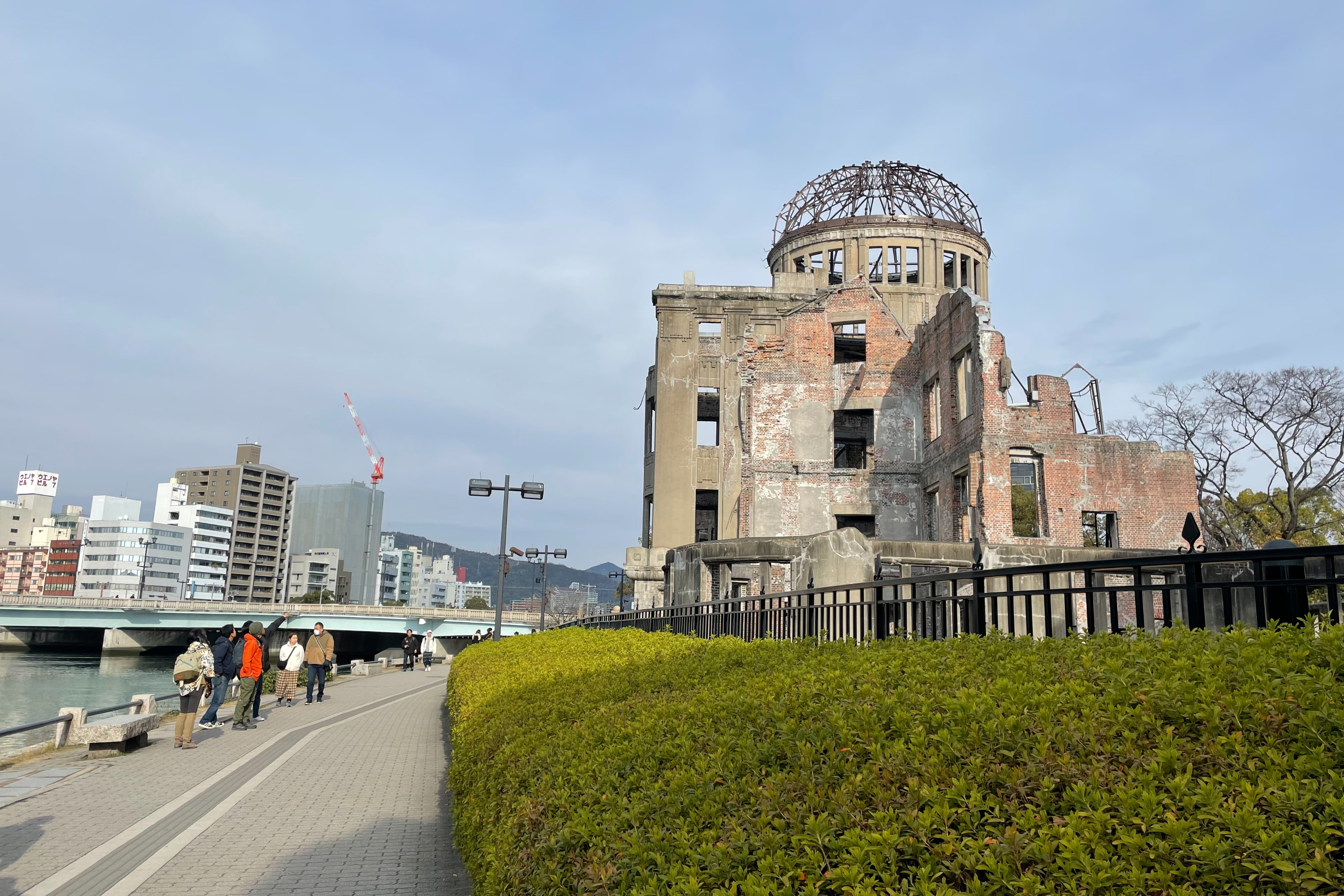
The Atomic Bomb Dome, the skeletal remains of the former Industrial Promotion Hall, sat almost directly below the hypocenter and was preserved rather than rebuilt. It is now a UNESCO World Heritage Site and the most photographed object in the city. If you want context for the dome itself, this guide to the Genbaku Dome walks through what survived and why.
The Peace Memorial Park surrounds the dome, and the museum on the south side of the park does the difficult work of presenting the human cost without sliding into either polemic or sentimentality. A deeper visitor account is collected in this writeup of the museum experience.
Hiroshima Castle, about a kilometer to the north, was destroyed in the same blast. Its story of destruction and reconstruction is a useful counterpoint to the dome: one ruin kept as a ruin, one rebuilt to look like it never fell.
Why the Specifics Still Matter
Most visitors arrive knowing the broad outline. The specifics matter because they push the bombing out of the abstract and into the physical: the time of day, the altitude of detonation, the temperature, the rainfall, the years over which people kept dying. Without those details, “Hiroshima” risks becoming a symbol so polished that the actual event slides out from underneath it.
I think about this often when I walk through the city. Hiroshima today is a normal Japanese regional city, with baseball games, river ferries, schoolchildren in summer uniforms, and a working downtown. That normality is not an erasure of what happened. It is the result of a deliberate, decades-long decision by the people who survived and the generations who followed.
Visiting With the Facts in Mind
If you come, the most useful thing you can do is move slowly. The museum needs a couple of hours. The Cenotaph, the Children’s Peace Monument, and the dome are all within a few minutes’ walk of each other. Reading even a few pages of survivor testimony before you visit will change what you see. The facts on this page are an outline. The texture lives in the personal accounts of the people who were there.