Hiroshima Carp Baseball: A Local's Guide to Mazda Stadium
Going to a Hiroshima Carp game at Mazda Stadium? A local explains tickets, transit, food, and the cheering culture that makes it memorable.
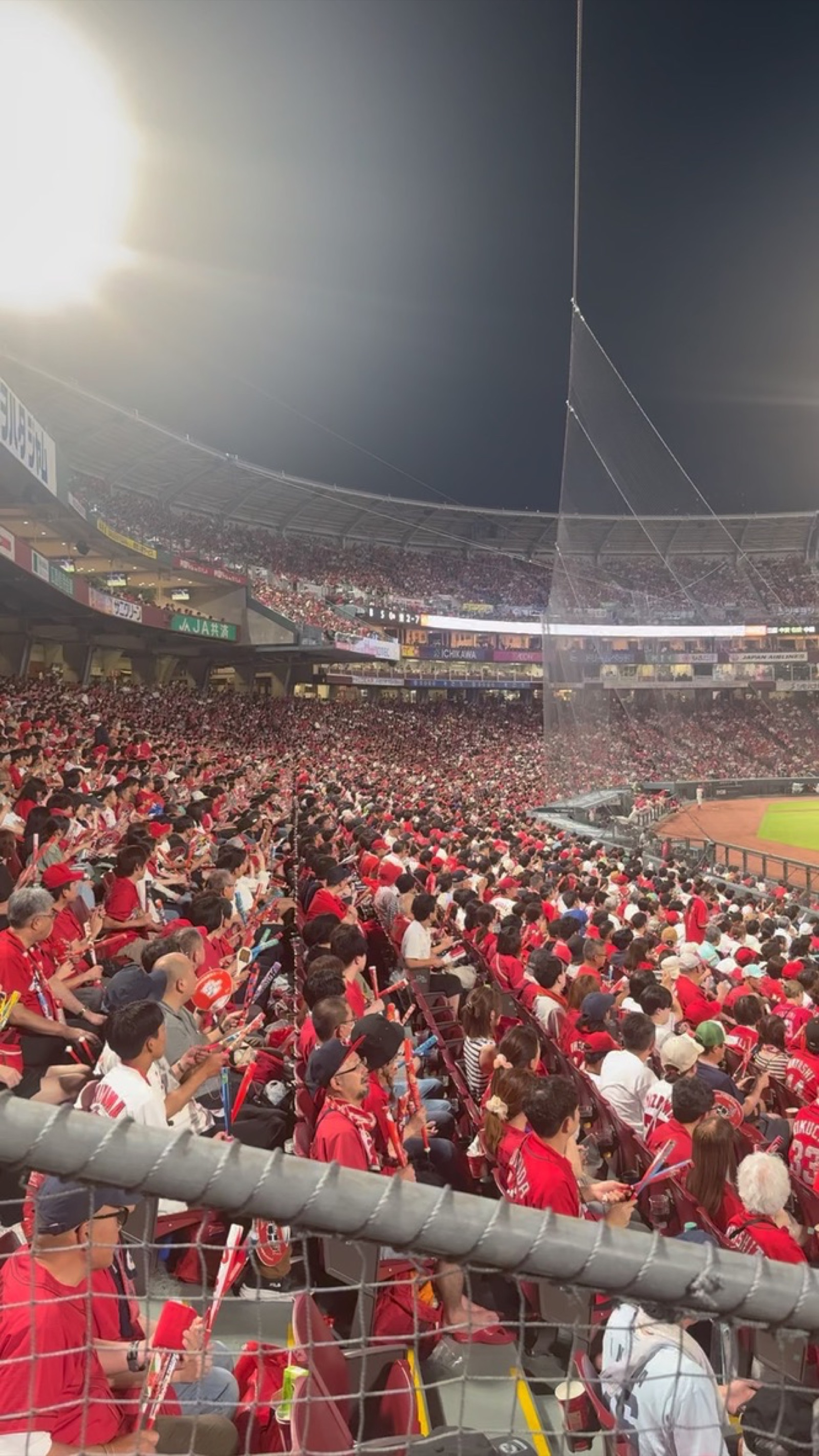
If you’re spending an evening in Hiroshima from late March through October and the Carp are home, going to a game at Mazda Stadium is one of the most fun things you can do that night. Tickets are easier to buy than first-time visitors expect, the stadium is a ten-minute walk from Hiroshima Station, and the food is actually worth eating. I’ve lived in Hiroshima for years and still go a few times a season, most recently with friends from Tokyo who’d never been to a Japanese baseball game and had a much better time than they expected. This guide covers tickets, getting there, what to eat, the cheering culture (which is the real draw), and where to go for a drink after if you want something better than a stadium beer. Treat it like a night out, not a sports obligation. Even if you can’t name a single player on the field, you’ll leave with a story.
What follows is the version of advice I give to friends visiting in season: enough to plan the night without overthinking it. If you only do one thing in this article, sort your tickets a few days ahead through the official Carp site or a Japanese ticketing platform. Same-day tickets are sometimes available, but selling out is real, especially weekend home games against popular opponents. The seats facing the outfield, on the side where the cheering squad runs the show, are the most fun for first-timers. The reserved seats behind home plate are calmer if you actually want to watch the baseball. Dress like you would for a long evening out. Hiroshima summers are humid and the open stadium has no cover from late-afternoon sun until first pitch.
Why a Carp Game Is Worth Your Evening
The Hiroshima Toyo Carp are the local team, and “local” here means something specific. The franchise is owned by Mazda (yes, that Mazda), and the city’s relationship to the team isn’t quite like any other in Japan. People wear red. People wear red on game days especially. You’ll see entire trains heading from Hiroshima Station full of red shirts on a Saturday afternoon, and it’s not staged. The fan loyalty is the kind of thing American sports cities only pretend to have.
The stadium itself opened in 2009 and replaced an older venue near Peace Park. The current site, Mazda Zoom-Zoom Stadium, is open-air, modern, and has wide concourses where you can wander to a food stand mid-inning without feeling claustrophobic. It’s also one of the few stadiums in Japanese pro baseball where you can see the field from almost any standing position around the concourse. The design pulls you toward the action even when you’re getting beer.
I’ve been maybe fifteen times. The atmosphere on a weeknight game with a half-full house is different from a packed Saturday against the Yomiuri Giants, but both are worth it. Honestly, weeknight games are my preference. Fewer crowds, easier food lines, and the cheering still goes hard.
How to Get Tickets Without Speaking Japanese
Tickets are the part that intimidates first-time visitors most, and it’s easier than you’d think. There are a few options, in rough order of ease for non-Japanese speakers.
The official Carp ticket site has a Japanese-only checkout, but Google Translate handles it well enough for the basic flow. You’ll need to register an account, which is the most annoying part. From there you pick the date, section, number of tickets, and pay with a credit card. They issue a QR code or a 7-Eleven pickup code.
If you’re already in Japan, the easiest fallback is to walk into any 7-Eleven, use the Loppi or multi-copy machine in the corner, and search for “広島東洋カープ” (Hiroshima Toyo Carp). The interface has an English option. Print the ticket at the counter, pay cash or card. This is what I usually do because I never plan ahead.
Same-day tickets are sometimes available at the stadium box office. Sometimes is the operative word. For popular matchups (Carp vs Hanshin, Carp vs Giants, weekend games against any team) you’ll likely be turned away. For a Tuesday or Wednesday game against a less popular opponent, walking up is usually fine. [VERIFY: current same-day box office hours and availability policy]
For ticket type, the cheapest unreserved outfield seats put you in the heart of the cheering section and are the right call if you want the full atmosphere. Reserved seats behind home plate are quieter and pricier. There are also party-style seats with tables and group seats if you’re with four or more. [VERIFY: current price ranges by section]
Getting From Hiroshima Station to Mazda Stadium
This is the easy part. Mazda Stadium is a flat ten-minute walk from the south side of Hiroshima Station. There are signs in English the whole way, and on game days you can just follow the people in red shirts. The dedicated pedestrian path is called Carp Road, and it takes you straight to the stadium with food stalls and team merchandise booths along the way.
If you’re coming from elsewhere in the city, say your hotel is in Hondori or near Peace Park, take a streetcar back to Hiroshima Station first, then walk. There’s no closer station to the stadium. Taxis from downtown are an option, but the post-game taxi line is rough, so taking a streetcar back after the game is often faster than waiting for a cab.
A useful detail: on game days, Carp Road becomes a small festival on its own. Food stalls open well before first pitch. If you arrive early, eating along Carp Road is more interesting than the stadium concourse, and usually cheaper. [VERIFY: typical stall opening time before first pitch]
What to Eat and Drink at Mazda Stadium
This is where Japanese ballpark food earns its reputation. American or European stadium food is a sad joke compared to what’s on offer here, and Mazda Stadium is one of the better examples in NPB.
Inside the stadium you’ll find versions of Hiroshima specialties. There are okonomiyaki-style snacks, oysters in season, stadium-only ramen counters, and a wide range of bento-style boxes named after Carp players. The player bentos rotate through the season, the box art is half the appeal, and you eat them at your seat. Beer is served by the famous “uriko,” young women carrying mini-keg backpacks who walk through the seats. You wave one over, hand them cash, and they pour you a draft right there.
Vegetarian options exist but aren’t abundant. The easiest fall-back is yakisoba, edamame, or one of the rice bowls without meat. If you have specific dietary needs, eat before you go. [VERIFY: any current allergen labeling at concession stands]
The thing nobody tells you: bring cash. Card acceptance has improved at some kiosks, but the older food stands and the uriko beer girls are still cash-first. ATM access inside is limited.
If you’d rather eat properly before the game, where to eat in Hiroshima has a few options within the ten-minute walk from the station. Personally I usually save room for the stadium food, but a proper meal beforehand is fair if you’re with people who want a sit-down dinner.
Understanding Carp Fan Culture (The Real Reason to Go)
The cheering is what makes a Carp game different from a baseball game anywhere else, and it’s the thing that surprises first-time visitors most.
Each player has a personal cheering song. Not just a walk-up song. A full song with lyrics, sung by the entire fan section in unison every time the player comes to bat. The fan section, called the oendan, on the outfield side runs this through trumpets, drums, and chant leaders. You don’t need to know the lyrics. The rhythm carries you. By the third or fourth batter, you’ll be clapping along whether you meant to or not.
When the seventh-inning balloon release happens, it’s the moment you’ll remember. Everyone, and I mean everyone, pulls out a long red balloon, called a jet balloon, inflates it, and on cue, releases them all at once. The sky over the stadium fills with thousands of red streamers. It’s silly and beautiful and unlike anything you’ve seen at an American game. [VERIFY: current balloon release schedule and any restrictions in place]
The balloons are sold inside the stadium in packs. If you don’t see them being sold near your seat, ask a concession worker, they’ll point you to the stand. [VERIFY: current pack price]
Visitor team fans get their own corner of the outfield, with their own cheering squad. The two oendan sections trade off based on who’s batting. It’s organized in a way that would feel impossible in a Western stadium and somehow works flawlessly here.
A regular at the stadium told me once that the Carp oendan is one of the most respected in the league among other teams’ fans. I don’t know if that’s measurable, but having sat in away sections at games in Tokyo and Osaka, the Hiroshima cheering is the most coordinated I’ve experienced.
What to Do After the Game
Most home games end mid-evening, and the crowd flows out toward Hiroshima Station, where the streetcars and trains absorb most of it within thirty minutes. If you want to avoid the crush, kill twenty minutes in the stadium plaza or walk back slowly along Carp Road. For dinner or a drink, the closest interesting area is downtown: Hatchobori, Nagarekawa, Otemachi. From the station to Otemachi is one streetcar ride or a short taxi.
If you’re not done eating, where locals go after 10 PM covers a few late-night options that handle the post-game crowd well.
Practical Things to Know
A few small details that come up. Games run April through early October, with playoffs into late October if the Carp make it. Spring nights can be cold, so bring a jacket. Summer is humid, so bring water. Open-air stadium means rain delays and rain cancellations are real, so check the official site before heading over if rain is in the forecast. Photography is fine in the stands, drones are not, and professional camera setups need approval.
Alcohol is allowed inside but not in glass containers. The uriko beer is the easiest path. Bathrooms are clean and plentiful, which sounds boring to mention except that anyone who’s been to a major American ballpark will appreciate the difference.
If you’re staying nearby, the closest cluster of options is the area around Hiroshima Station itself. For neighborhood context, the Hiroshima neighborhoods guide covers Hatchobori, Otemachi, and the rest of central Hiroshima for figuring out where to be after the game.
Bars Worth the Walk
If you’re walking back through Otemachi, a small craft cocktail bar called VUELTA is a place a friend of mine opened earlier this year. Sixteen seats, very quiet after the noise of a packed stadium. They take their ice and dilution seriously and the room is calm enough to actually talk about the game you just watched. Walk-ins are fine on weeknights, but you can book through their site for a Friday or Saturday.
For a more atmospheric option, Bar Alegre is up on the third floor in Horikawacho, just off Hatchobori. The entrance is a low door that makes you bow your head as you walk in. It’s a speakeasy-style room that reads like a fusion of a 1920s American hidden bar and a Japanese tea room. Owner Shū Kojima has decades of hotel-bar experience and runs the place like he’s serving you in a private club. Late-night hours, classic cocktails, whisky-forward menu.
If you went to a day game and have time to kill before dinner, Bar Upstairs is one of the few places in town that opens at two in the afternoon. It’s on the fifth floor on Yagenbori-dori. The owner spent fourteen years bartending at Hotel Granvia before opening here, and the menu has both proper cocktails and a small cafe lineup if a friend in your group isn’t drinking yet.
Frequently Asked Questions
Do I need to speak Japanese to attend a Carp game at Mazda Stadium?
No. The ticketing site is Google Translate-friendly, the 7-Eleven Loppi machine has an English option, the stadium has English signage, and concession workers are used to international visitors. You’ll be fine.
How early should I arrive at Mazda Stadium?
Gates usually open around two hours before first pitch. I’d aim for sixty to ninety minutes early, enough time to walk Carp Road, grab food, and find your seat before the cheering starts.
Are Hiroshima Carp tickets hard to get?
For weekday games against less popular teams, no — same-day is often fine. For weekend games against the Giants or Hanshin, book at least a few days ahead through the official site or 7-Eleven Loppi machines.
Is Mazda Stadium worth visiting if I don’t follow baseball?
Yes, more than people expect. The cheering culture and the seventh-inning balloon release make the experience memorable even if you couldn’t name a single player on the field. Treat it as a cultural event with baseball happening in the background.
What should I wear to a Hiroshima Carp game?
Whatever you’d wear for a casual evening out, plus a jacket if it’s spring or fall. Wearing red signals you’re rooting for the home team and won’t get you any pushback even if you’re not Japanese.