Hiroshima to Osaka by Shinkansen: A Local's Practical Guide
How to take the Shinkansen from Hiroshima to Osaka: train types, tickets, station tips, luggage rules, and what to know about the Japan Rail Pass.
The Shinkansen between Hiroshima and Osaka is one of the smoothest train rides in Japan. The trip is short enough to feel like a long lunch break, and the service runs often enough that you can plan loosely. Here’s what I tell friends who ask me how to do it without overthinking the details.
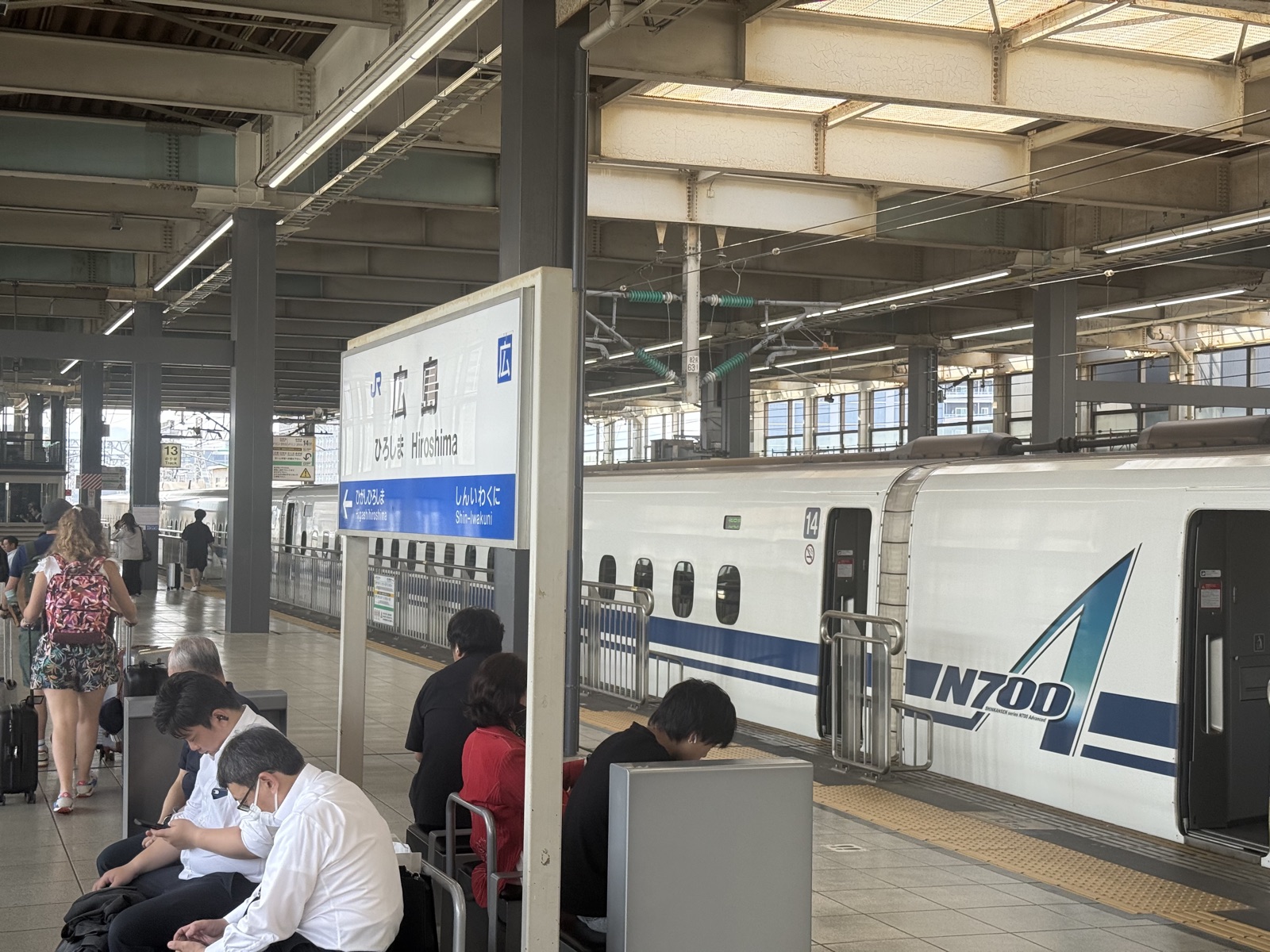
The Three Trains You’ll See
The Sanyo Shinkansen line connects Hiroshima Station and Shin-Osaka with three named services: Nozomi, Sakura, and Hikari. Nozomi is the fastest and makes the fewest stops. Sakura and Hikari add a few more station calls and run slightly longer, though the difference is modest — you’re still looking at roughly an hour and a half either way. For most travelers, the choice comes down to whatever leaves soonest after you reach the platform.
Tickets and the Japan Rail Pass
You can buy tickets at the green ticket machines inside Hiroshima Station, at the staffed Midori-no-Madoguchi counter, or online through the JR West and JR Central booking sites. Fares vary by class (ordinary or Green Car) and by whether you take a reserved or non-reserved seat. The non-reserved cars are perfectly fine outside peak holiday periods. For Golden Week, Obon, or New Year week I would reserve.
The Japan Rail Pass covers Sakura and Hikari without restriction. Nozomi has a separate arrangement that JR has updated more than once in recent years, so check the current pass terms before you assume coverage. If your pass works on Sakura, you won’t save meaningful time by switching to Nozomi anyway.
Getting to Hiroshima Station and Out of Shin-Osaka
The Shinkansen platforms at Hiroshima Station sit on the north side of the building. Reaching them from anywhere in the city is easy: the tram stops directly in front, the Astram and city bus lines feed into the station, and taxis from central areas like Otemachi take only a few minutes. If you’re still figuring out local transport, my Hiroshima streetcar guide and travel card guide cover what most visitors need.
Shin-Osaka is the Shinkansen terminus, not central Osaka. To reach Umeda, Namba, or Osaka Castle you transfer to the JR Kyoto line, the Osaka Metro Midosuji line, or a taxi. The transfer area is well signposted in English and the walk between platforms is short.
Riding Tips Worth Knowing
If you’re traveling with a large suitcase, the reserved area at the back of each car is the place for it. Oversized luggage policy on Shinkansen has tightened in recent years, and very large bags officially require an advance reservation when you book your seat. For everyday-sized rolling cases, the overhead racks and the space behind the last row of seats work fine.
Pick a seat on the right side of the train when heading east. That’s the Seto Inland Sea side for parts of the route, and the views are worth the small bit of planning. Buy an ekiben (station bento) before boarding rather than relying on the trolley service. The selection at Hiroshima Station is good, and eating on the Shinkansen is part of the experience.
After You Get Back
If you’ve come back from Osaka with a couple of free days, it’s worth thinking about what to do beyond the obvious stops. I’ve written about easy day trips from Hiroshima, how many days to plan for a Hiroshima visit, and, for anyone still debating the eternal question after a trip between both cities, Hiroshima okonomiyaki versus the Osaka version. Each pairs naturally with a Shinkansen-based itinerary.