What to Eat in Hiroshima Beyond Okonomiyaki
What to eat in Hiroshima beyond okonomiyaki, from a resident. Tsukemen, mazemen, anago, oysters, and sake, plus where I actually go to eat them.
If you want to know what to eat in Hiroshima beyond okonomiyaki, the short answer is noodles, conger eel, oysters, and sake, in roughly that order of how often locals actually reach for them. Okonomiyaki is worth one meal, maybe two. But I live here, and I can tell you that in a normal week most of us are eating something else entirely. I moved to Hiroshima a few years ago and spend my days working in hospitality in the center of town, which means I eat out more than is probably good for me. This is the list I give friends who message me before a trip and ask what to order once they’ve ticked the famous pancake off. It leans toward the things that are genuinely local, not just generically Japanese, and toward places you can reach on foot or a short streetcar ride from the main station and Peace Park area.
Okonomiyaki Is Great, But It’s Not the Whole Plate
Hiroshima puts okonomiyaki on every poster, and the layered, cabbage-heavy, noodle-stuffed version really is worth sitting at a hot griddle for at least once. I’m not here to argue against it. If you haven’t had it yet, go, and our guide to the best okonomiyaki in Hiroshima will point you somewhere decent.
But here’s a mild opinion you can disagree with: the okonomiyaki at the most famous, longest-queue places is often a worse use of your time than the small counter two streets over with no line. The dish is more forgiving than people think. Once you’ve had it, the more interesting question is what the rest of us eat the other six days of the week. That’s what the rest of this is about.
Noodles That Aren’t Ramen
Hiroshima has a noodle culture that goes well past the standard ramen bowl, and this is where I’d send a first-timer who’s already done okonomiyaki.
The one people talk about is tsukemen, the cold dipping-noodle dish served with a fierce red, chili-loaded sauce. It is not subtle. You pick a spice level, dunk the noodles, and sweat. It’s a summer thing for a lot of locals, though shops run it year round. If you want the background and a few specific counters, we’ve got a Hiroshima tsukemen guide that covers it properly.
Then there’s tantanmen, which in Hiroshima usually means the soup-less style: noodles tossed with sesame, chili oil, and ground pork, no broth pooling at the bottom. You mix it hard at the table and add a splash of vinegar near the end. It became a real local obsession over the last decade or so, and there are now shops that do almost nothing else. The local tantanmen guide breaks down where to go and how spicy to order.
Less famous, and the one I order most often myself, is mazemen, a thick flat-noodle bowl with a soy base rather than the city’s signature red heat. It’s the kind of thing you eat at lunch and then think about again at midnight. A casual noodle meal here usually lands somewhere around a thousand yen, give or take what you add on top.
Anago, Not Unagi
Most visitors come to Japan primed to eat unagi, freshwater eel. In Hiroshima the eel you want is anago, sea conger, which is lighter, a little flakier, and to my taste better suited to a hot afternoon than the heavier, richer unagi.
The classic format is anago-meshi, the eel laid over rice in a lacquer box, often with a small bowl of clear bone broth on the side. It’s tied historically to the Miyajima ferry area, where it started as station food, but you’ll find good versions in the city too. Honestly, I think a calm anago-meshi lunch beats a rushed okonomiyaki dinner if you only have room for one local specialty and you don’t love a crowd. Our guide to where to eat anago in Hiroshima has the specifics.
Oysters, and the Rest of the Seto Inland Sea
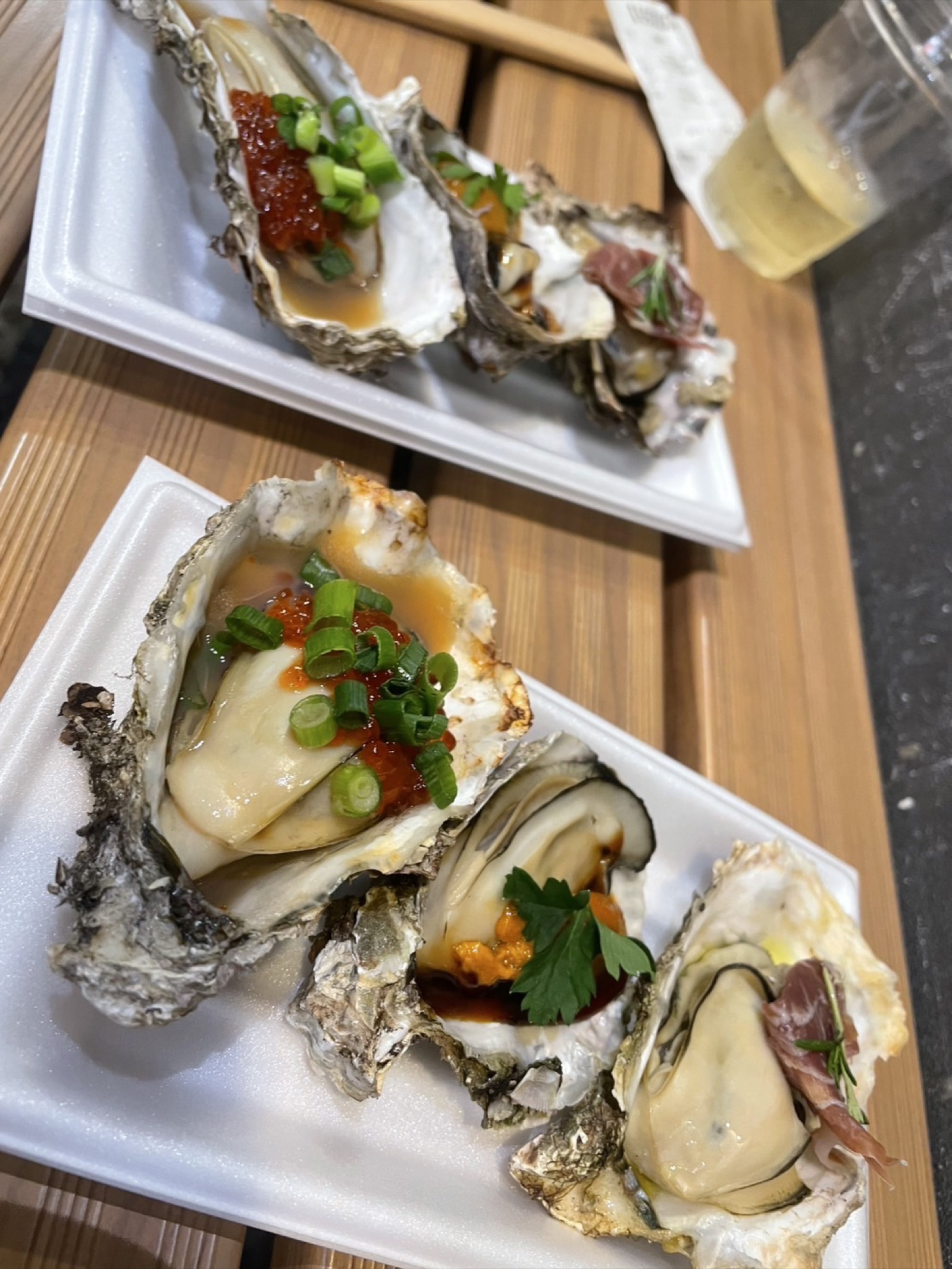
Hiroshima grows a huge share of Japan’s oysters, and from late autumn through winter they are everywhere: grilled in the shell at stalls, fried as kaki-fry, dropped into hot pot, or just served raw with lemon. Peak season is roughly November through February, so if you’re reading this in June you’ve mostly missed the best of it, though some places serve them frozen or farmed year round. The full rundown lives in our Hiroshima oysters guide.
What people forget is that the Seto Inland Sea gives up a lot more than oysters. Small silver fish, octopus, and a rotating cast of seasonal catch show up at izakaya and standing bars across the center of town. In early summer, which is when I’m writing this, it tips toward lighter grilled fish and raw octopus rather than the heavy winter oyster spread. If you sit at a counter and ask what’s good today, you’ll usually get a better meal than anything on the printed menu.
A local lemon footnote: Hiroshima prefecture grows most of Japan’s lemons, mainly out around Setoda, and you’ll see lemon turn up in sours, on grilled fish, in sweets, in places you wouldn’t expect. It’s worth ordering at least one thing with it just to taste how different a fresh domestic lemon is.
Sake Counts as Food Here
This is a food article, but in Hiroshima the line between eating and drinking sake is blurry, and I’d be leaving out something real if I skipped it. The town of Saijo, about forty minutes east by local train, is one of Japan’s three great sake-brewing centers, with a cluster of breweries you can walk between in an afternoon. Hiroshima’s water is soft, which historically pushed local brewers toward a rounder, slightly sweeter style that pairs naturally with the city’s seafood.
You don’t have to leave the city to drink it. Plenty of central izakaya pour local labels, and a flight of three alongside grilled fish or oysters is, to me, the most Hiroshima meal there is. If you’d rather a guided version, there’s a Saijo sake town guide for the day trip.
Practical Notes
A few things worth knowing before you go ordering.
Most casual noodle and rice spots are cash-friendly and quick, and you rarely need a reservation for lunch. Cards and IC payment have spread a lot in the last couple of years, but small old counters can still be cash only, so carry some. Dinner at a busy izakaya on a Friday or Saturday is worth booking ahead if you can.
English menus are hit or miss. Tourist-facing places near Peace Park usually have them; the smaller local counters often don’t, though pointing and a friendly face get you a long way. The center is compact, so most of what’s above sits within a short walk or one streetcar ride of the Hondori and Kamiyacho area. For a tighter map of one neighborhood, our Otemachi food guide covers the part of town I know best.
My Hiroshima Regulars
If you’re after the mazemen I mentioned earlier, Okkundo in Otemachi is where I go. It’s a mazemen specialist doing the flat thick noodles with a soy base instead of the usual red heat, and you pick your spice level from zero to seven when you order. Long hours, casual, good for a solo lunch or a late bowl when most kitchens have closed.
For something less of a quick-counter meal, I end up at MORETHAN Hiroshima a lot. It’s the restaurant on the ground floor of THE KNOT hotel in Otemachi, near Chuden-mae, open from breakfast through dinner with a charcoal grill and seasonal local ingredients. No dress code, no need to book weeks out, which makes it easy when plans are loose. It’s comfortable for a long lunch that drifts into the afternoon.
And if you’re still going after dinner, VUELTA is a small craft cocktail bar in Otemachi I drop into often. Sixteen seats, quiet, with real attention paid to the ice and the dilution rather than gimmicks. Walk-ins are usually fine, but you can book a counter seat through their site if it’s a weekend.